






 |
 |
 |

Alida Valli
Article | Downloads | Image Credits
| Page 2 |
|
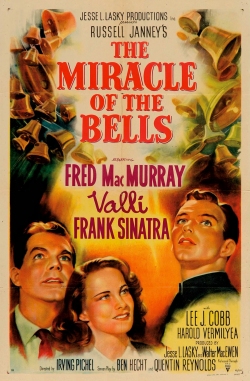
Though ostensibly Olga's story, the film version of THE MIRACLE OF THE BELLS ends up being the tale of a Hollywood press agent and his one-man crusade to convince the producer of Olga's only film that he should release it despite the death of its star. When what appears to be an act of divine intervention takes place to further Bill's argument, instead of prompting a discussion about the nature of miracles (as happens in the novel), the film treats it as a fortuitous curiosity, explaining it away and thereby blunting much of the emotional and theological impact it provided in the novel. Reaction to the film was generally favorable in middle America but more cynical on the coasts. Ben Hecht and Quentin Reynolds' screenplay bore the brunt of the criticism, while Valli's personal reviews were good and generally paralleled those of the film -- the more reviewers liked it, the more they liked her (or vice-versa). Due to Selznick's difficulties editing THE PARADINE CASE, in most American cities, THE MIRACLE OF THE BELLS beat THE PARADINE CASE to movie screens and became the film by which Valli was first introduced to American audiences. Because she was still largely unknown however, it was the novel's best-seller status and her male co-stars who proved the film's biggest box-office draw. The casting of Frank Sinatra as a priest at a time when he was receiving very negative press about some off-color public behavior was not warmly received however. Though billed as his first "straight dramatic" role, Sinatra was eventually given a song (the English version of a Polish song sung by Valli earlier in the film), and his critics saw the casting as a public relations ploy to improve Sinatra's image, taking a page from the playbook that had won Bing Crosby an Oscar (for playing a priest in GOING MY WAY) in 1944. From a box-office perspective, casting Sinatra ultimately attracted the wrong audience to the film: THE MIRACLE OF THE BELLS was too serious and transcendental for his bobby-soxer fans. Released by RKO, its ultimate box-office performance proved disappointing. |
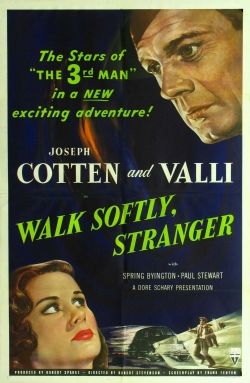
WALK SOFTLY, STRANGER (1950) with Joseph Cotten. |
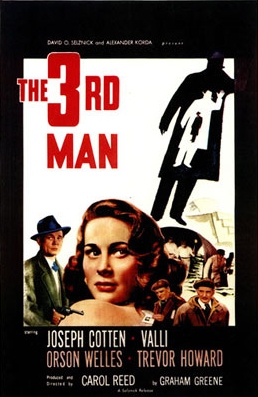
THE THIRD MAN (1949) with Orson Welles and Joseph Cotten. Multimedia Clips:
|
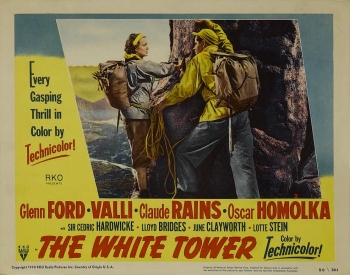 THE WHITE TOWER (1950) with Glenn Ford.
 |
Memorable Quotations:
|
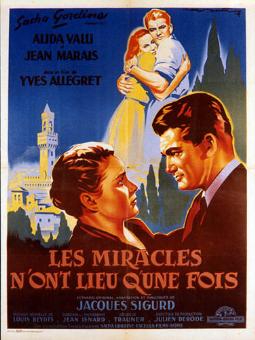 LES
MIRACLES N'ONT LIEU
QU'UNE FOIS (1951) LES
MIRACLES N'ONT LIEU
QU'UNE FOIS (1951)(aka MIRACLES ONLY HAPPEN ONCE) with Jean Marais. How to make Jerome's origami swan with the flapping wings.
|
 Even
before THE PARADINE CASE had been edited, let alone released, word got around in
Hollywood about
Even
before THE PARADINE CASE had been edited, let alone released, word got around in
Hollywood about
 These pages
are still under construction.
These pages
are still under construction.

| Now in Print! |
|---|
| Now on DVD! |
|---|
Buy Videos & DVDs |
|
Buy Movie Posters |
|
Buy Movie Posters |
|
Classic
Movie Merchandise |



|

|
 Printer-friendly version.
 Return
to the top.
Return
to the top.
Last updated:
March 10, 2011.
Reel Classics is a registered trademark of Reel Classics, L.L.C.
© 1997-2011 Reel Classics, L.L.C. All rights reserved. No
copyright is claimed on non-original or licensed material.
Terms of
Use.